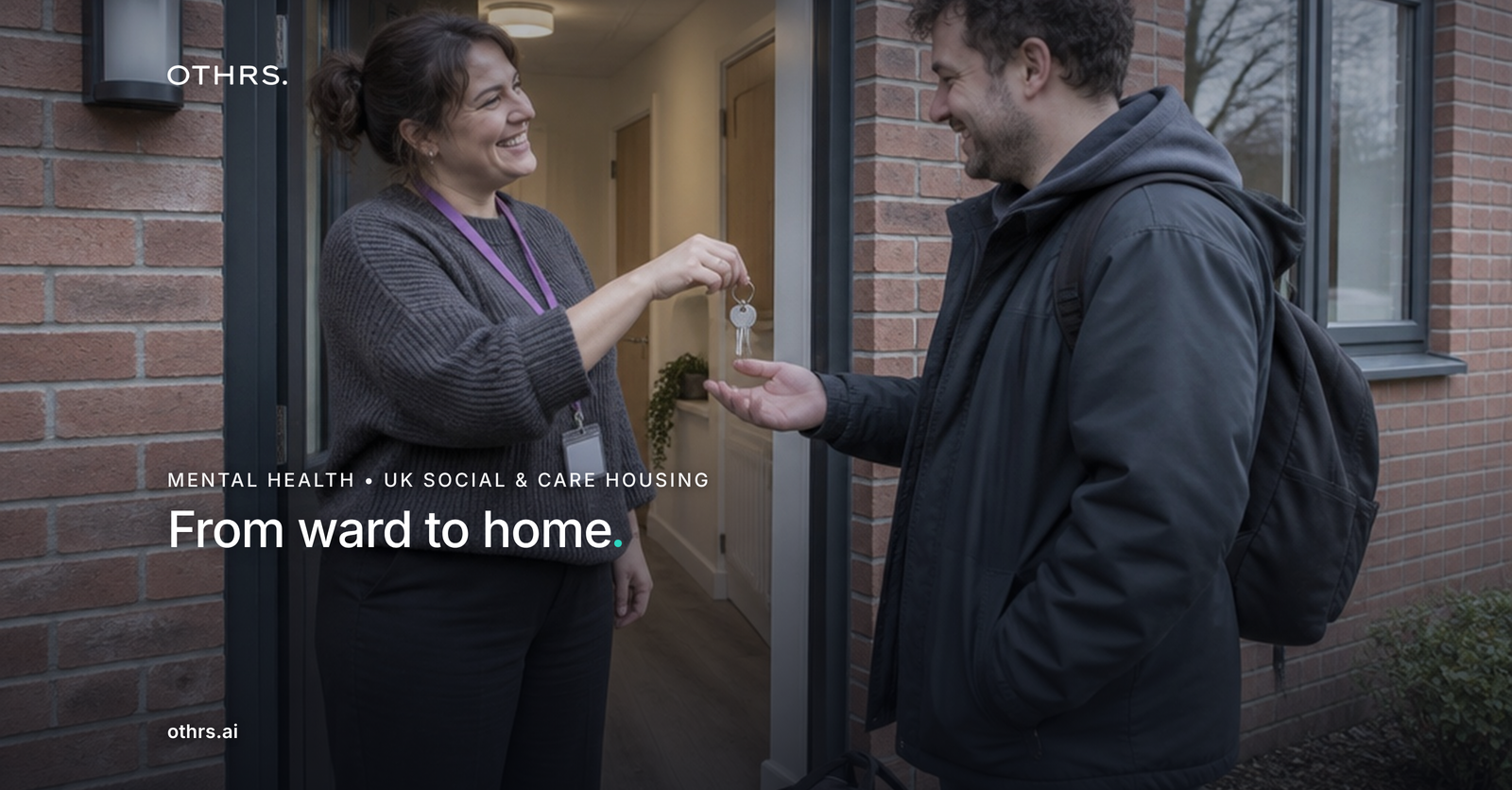

For an adult with a learning disability, supported living can mean the difference between being placed somewhere and having a home. The person has their own tenancy, their own front door and their own say, with support that comes to them rather than a service that owns the building. Understanding how that works is the first step for families, commissioners and the providers who deliver it.
This guide explains what supported living is, how someone gets it, who pays, and what rights and safeguards apply. It is educational, not legal advice, and parts of the law have changed recently.
What supported living is
The Care Quality Commission describes supported living as a setting where the care and the accommodation are arranged separately. Where care is a condition of living in the accommodation, there must be a real separation between the accommodation agreement and the care agreement, and in supported living the person can choose a different provider for their personal care. That separation is what makes it different from a care home, where the accommodation and care come together from one provider.
How someone gets support
Support starts with a needs assessment from the local authority under the Care Act 2014. To be eligible, a person's needs must arise from a physical or mental impairment or illness, they must be unable to achieve 2 or more of 10 outcomes set out in the Care and Support (Eligibility Criteria) Regulations 2015, and there must be, or be likely to be, a significant impact on their wellbeing. Eligible people then have a support plan and a personal budget.
The statutory guidance tells councils to encourage genuine choice between types of service, and names shared lives, extra care housing and supported living among them. It also says working age adults should not be limited to facilities designed for older people. The guidance is currently flagged as under review following the Health and Care Act 2022, so check the latest version.
Who pays
The rent and the support are paid for separately. Where supported housing provides care, support or supervision, a resident can claim Housing Benefit for the housing costs, and where it does not, Universal Credit housing costs apply, according to GOV.UK. Care and support is arranged and funded through the council, with the NHS involved where there is a health need. Our guide to supported living funding explains the 2 streams.
How many people use it
Department of Health and Social Care statistics show about 137,000 adults aged 18 to 64 received long term support for a learning disability in England during 2024 to 2025. That figure covers all long term support, not only supported living, and the department notes that the figures are rounded and that some comparisons with earlier years may be affected by changes to the data source and methodology.
Rights and safeguards
A supported living arrangement must respect the person's capacity and choices. In June 2026 the Supreme Court ruled that the long used Cheshire West test for deprivation of liberty was wrong and replaced it with a multifactorial assessment in which a person's valid consent and lack of objection are relevant. GOV.UK says the ruling applies immediately. It also says that for adults living in the community, a deprivation of liberty is still authorised through the Court of Protection, and that the government expects to issue interim guidance. Providers and commissioners should take legal advice on current practice.
The policy direction
The government's Building the Right Support action plan, published in 2022 and now marked as historic on GOV.UK, set goals for the right housing, care and support in the community and committed to investment to increase the supply of supported housing and to understand the size, cost and demand of the sector. NHS England guidance on helping autistic people and people with a learning disability to live well in their communities builds on the 2015 Building the Right Support and says integrated care boards should ensure access to practical housing support, including the Disabled Facilities Grant.
5 questions families and commissioners should ask
- Is the tenancy genuinely separate from the care contract?
- Can the person change their care provider without losing their home?
- Who is registered with the Care Quality Commission, and for what?
- How were the person's wishes recorded and used in choosing the home?
- If the person's liberty is restricted, has the right legal authorisation been obtained?
How OTHRS helps
Finding the right home for a person with a learning disability depends on matching the person's needs with a property, a provider and a funder, and that information usually sits in separate places. OTHRS is being built so that local authorities can publish the demand they have, so that care providers can see demand that fits their registered services and areas, and so that housing providers and developers can show verified opportunities. Every match is meant to show its reasoning, and people make the decision. OTHRS does not assess individuals or replace the council's duties.
Frequently asked questions
What is supported living?
Accommodation where the person has their own tenancy and receives care and support arranged separately, so they can choose a different care provider.
How is it different from a care home?
In a care home the accommodation and care come together from one provider. In supported living they are separate agreements.
How do I get supported living for an adult with a learning disability?
Ask the local authority for a Care Act needs assessment. Eligible people are given a support plan and a personal budget.
Who pays the rent?
Usually Housing Benefit for supported housing that provides care, support or supervision, claimed by the resident.
Does a supported living resident have the same rights as anyone else?
Yes. Their capacity and choices must be respected, and any deprivation of liberty needs proper legal authorisation.
See published demand and verified providers in one place. Sign up at othrs.ai.
Sources
- CQC, personal care regulated activity
- Care and Support (Eligibility Criteria) Regulations 2015, regulation 2
- Care and support statutory guidance
- Building the Right Support action plan (2022)
- NHS England, supporting autistic people and people with a learning disability to live well in their communities
- Adult Social Care Activity report 2024 to 2025
- GOV.UK, Supreme Court 2026 judgment on deprivation of liberty
- GOV.UK, Housing Benefit for supported accommodation